
Laundry is one of those household chores that never seems to disappear, but the right laundry room design can make the entire process feel much easier. A well-planned laundry space can give every detergent bottle, towel, basket, and cleaning supply a proper home. Whether you live in a large suburban house, a small apartment, or a modern townhouse in the USA, there are many ways to improve your laundry area without making it complicated. Smart shelving, useful cabinets, folding surfaces, drying racks, and attractive decor can turn an ordinary utility space into an organized room. These laundry room ideas focus on combining practicality with a clean and welcoming appearance. From compact laundry closets to spacious rooms with side-by-side appliances, there is an option for almost every American home. The goal is to create a space where sorting, washing, drying, folding, and storing clothes becomes more convenient.
1. Add a Spacious Folding Counter
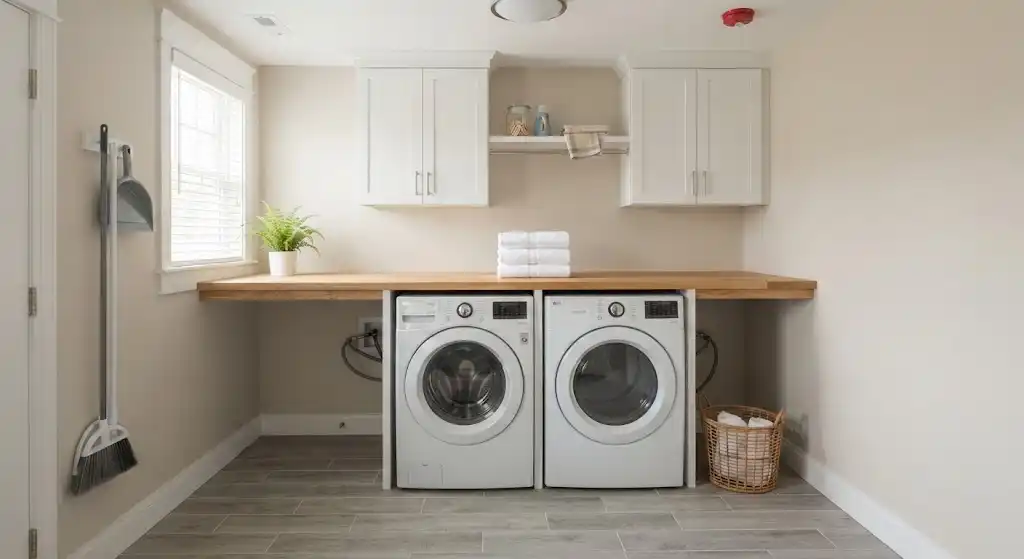
A dedicated folding counter is one of the most useful laundry room ideas for making washing day easier. Instead of carrying clean clothes to another room, you can fold everything immediately after removing it from the dryer. A countertop installed above front-loading washers and dryers can create a convenient work surface without taking up additional floor space. For a traditional laundry room, a wood-look countertop can add warmth while quartz or laminate provides an easy-to-clean surface. Leave enough space around the appliances for comfortable access and ventilation. A counter can also provide a temporary place for laundry baskets while clothes are being sorted. In a busy American household, this simple feature can reduce the number of trips between the laundry room and bedrooms. Keep the surface mostly clear so it remains practical rather than becoming another storage area. Add a small basket or container for items that need special attention. A well-designed folding station can make the entire laundry routine feel faster and more organized.
2. Install Cabinets Above the Washer and Dryer
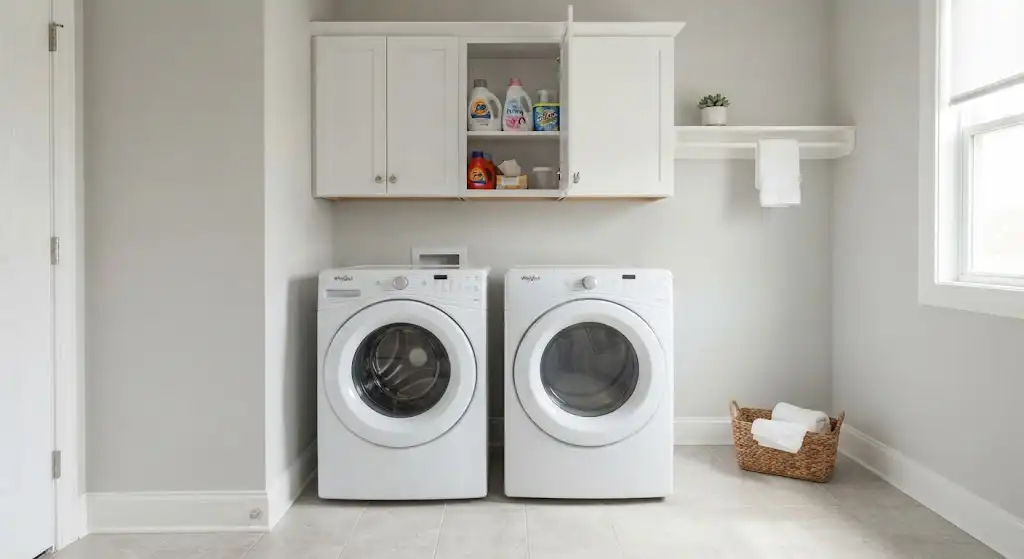
Upper cabinets can instantly make a laundry room feel cleaner because they hide detergent, stain removers, cleaning products, and other supplies. In many American homes, the wall above the washer and dryer is unused, making it an ideal location for storage. White shaker cabinets create a classic appearance that works well with many interior styles. For a warmer look, consider light wood cabinetry with simple hardware. Closed cabinets are especially helpful when you want the room to look tidy even when several laundry products are being used regularly. Organize the inside with small bins so similar items stay together. Keep frequently used products on an easily accessible shelf and less frequently used supplies higher up. Make sure cabinets are installed securely and do not interfere with appliance doors or ventilation. A combination of cabinets and open shelving can provide both hidden storage and decorative space. This approach works particularly well in laundry rooms where floor space is limited.
3. Create a Small Laundry Room Station
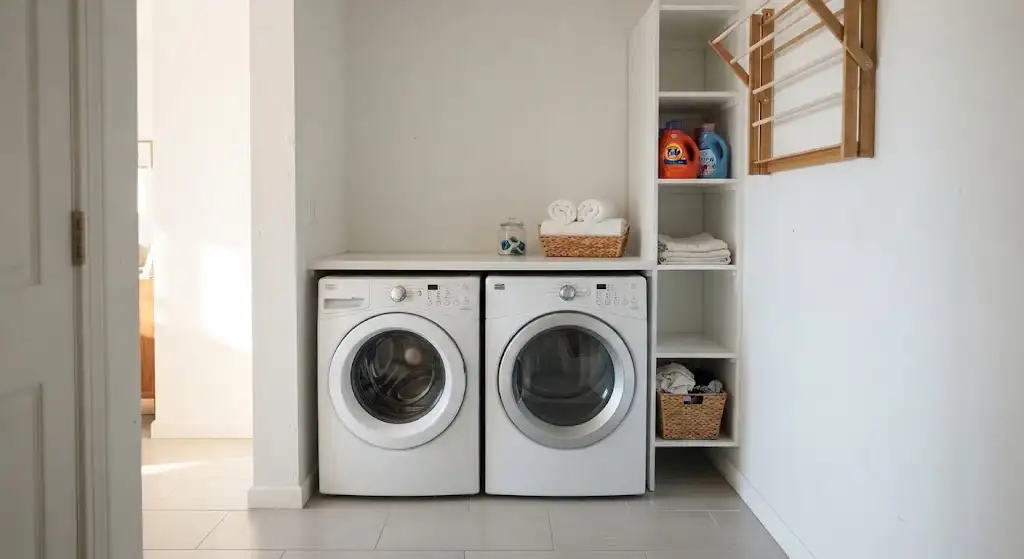
A small laundry room does not need to feel cramped if every inch is planned carefully. A narrow laundry closet or compact utility area can still include storage, a folding surface, and space for laundry baskets. Front-loading appliances are especially useful because their tops can support a countertop. Vertical shelving can take advantage of wall space without making the floor feel crowded. Choose light colors such as white, cream, pale gray, or soft beige to create a more open appearance. Sliding doors or bifold doors can hide the laundry area when it is not being used. Wall-mounted drying racks are another useful option for compact spaces. Keep only everyday laundry essentials within easy reach and store backup products elsewhere. A slim rolling cart can fit between appliances or inside a narrow gap. With thoughtful organization, even a small laundry room can function efficiently for a busy household.
4. Add a Deep Utility Sink
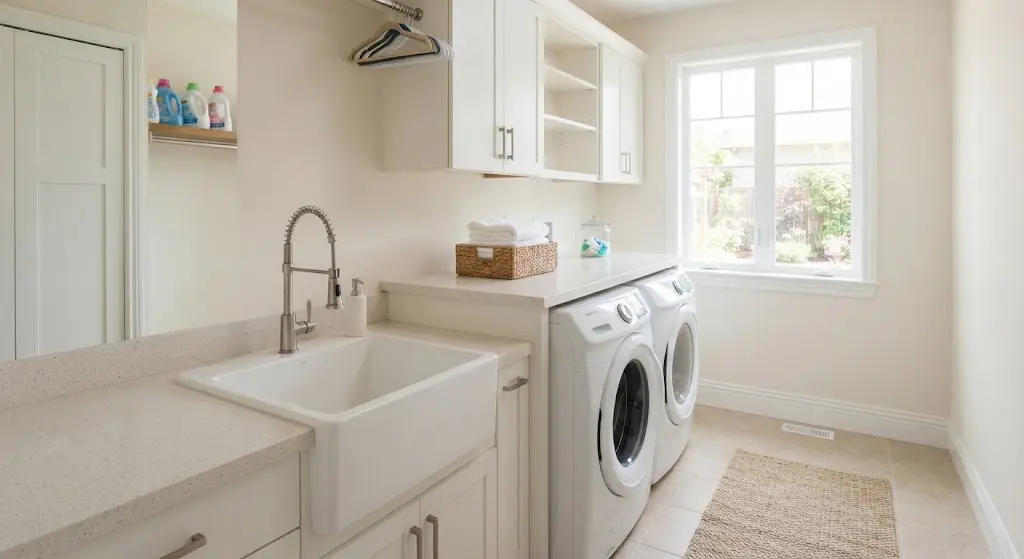
A utility sink can be extremely valuable in a laundry room, particularly for households with children, pets, or clothing that frequently needs stain treatment. It provides a separate place for soaking garments, washing muddy shoes, cleaning small household items, or rinsing messy supplies. A deep white farmhouse-style sink can create a practical focal point in a larger laundry room. For a modern design, an undermount or stainless-steel utility sink can look sleek and professional. Place the sink near the washer so wet clothing can move easily from one area to another. Add a pull-down or high-arc faucet for greater flexibility when washing bulky items. Keep stain-removal supplies in a nearby cabinet for convenience. A countertop beside the sink can provide space for sorting or pretreating clothes. This setup can make difficult laundry tasks considerably more manageable.
5. Use Open Shelving for Everyday Supplies
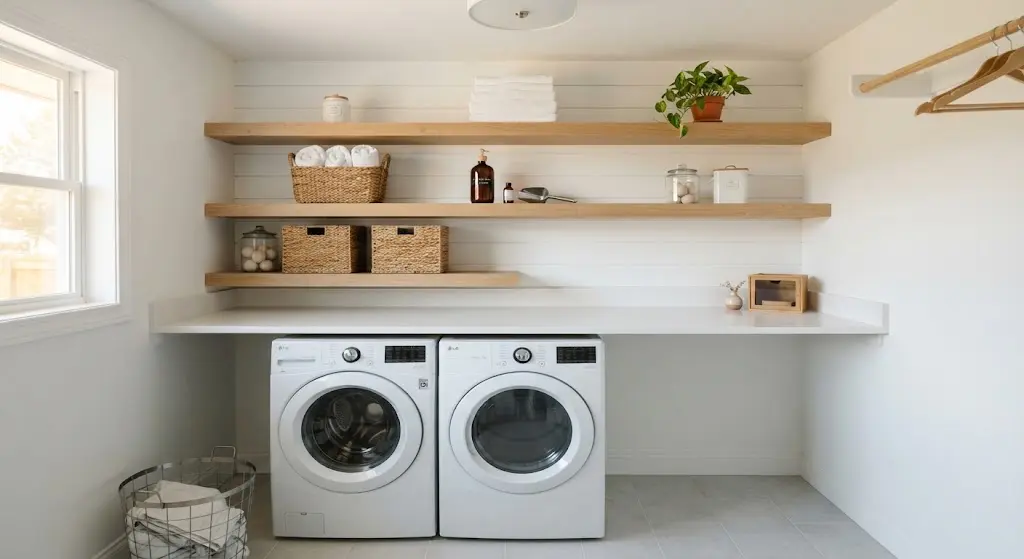
Open shelves make frequently used laundry products easy to grab without opening cabinets every time. They can also make a laundry room feel more spacious because the shelves visually occupy less space than large closed cabinets. Install two or three sturdy shelves above a countertop or beside the appliances. Use matching baskets to prevent the shelves from looking cluttered. Keep detergent, dryer balls, stain removers, and folded towels grouped into separate sections. Decorative containers can create a more attractive appearance while still keeping supplies accessible. Wooden shelves work particularly well in white laundry rooms because they add warmth and contrast. Make sure heavy products are stored on strong, securely mounted shelves. Open shelving is especially helpful for families who do laundry frequently throughout the week. It provides practical storage while giving you the opportunity to add a little personality to the room.
6. Install a Wall-Mounted Drying Rack
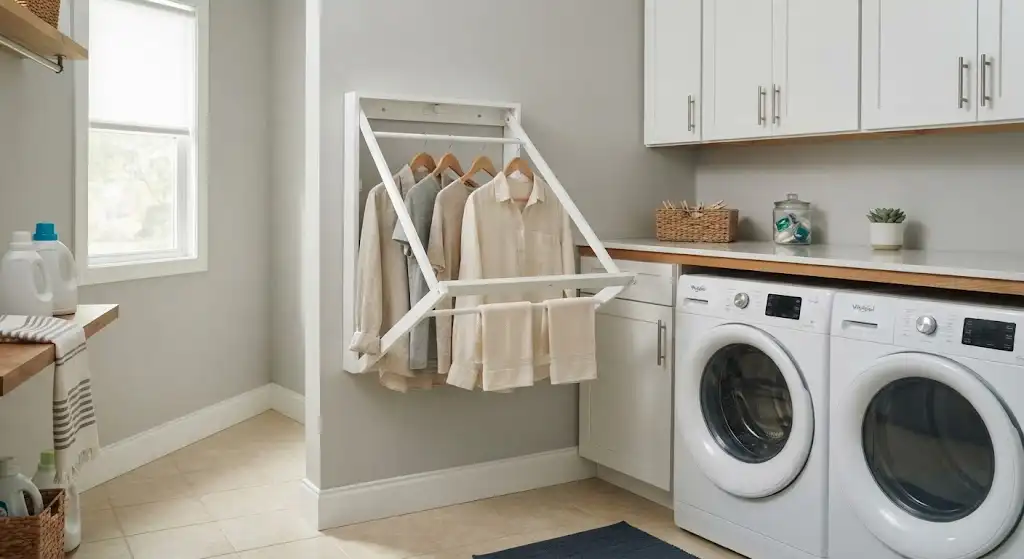
A wall-mounted drying rack is a smart solution for clothing that should not go into the dryer. It can provide a dedicated location for air-drying shirts, delicate garments, workout clothing, and other items. This is particularly useful when floor space is limited because the rack can fold against the wall when it is not being used. Install it close to the washer or dryer so wet clothes do not need to travel across the house. A simple white metal rack can blend into a modern laundry room, while natural wood can create a warmer appearance. Place a small basket nearby for clothespins or reusable laundry accessories. Make sure the rack is securely attached to wall studs or appropriate hardware. When opened, it should have enough clearance for garments to hang without touching cabinets or appliances. This small upgrade can make laundry day more convenient and reduce unnecessary trips.
7. Create a Dedicated Laundry Basket Zone
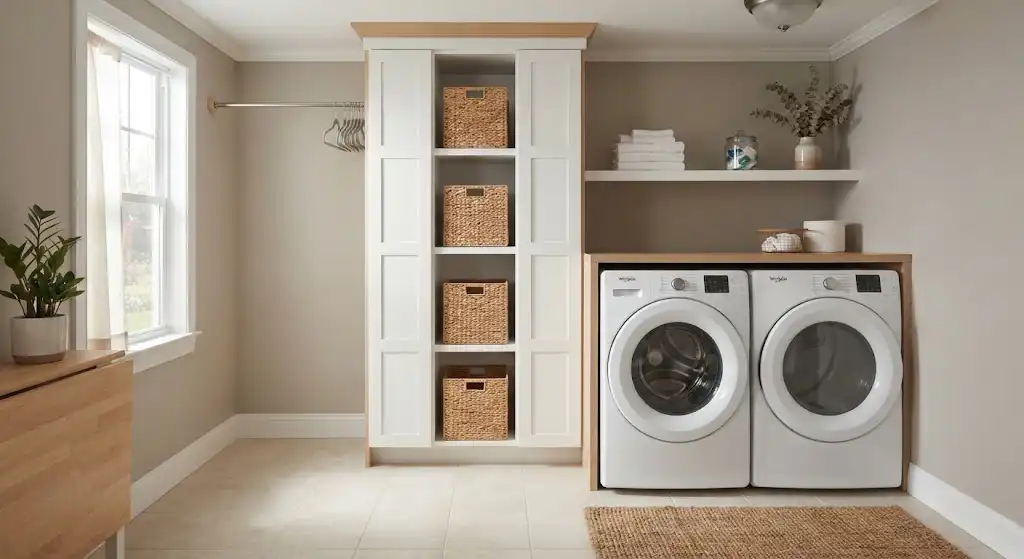
Laundry baskets often become a source of clutter when there is no specific place to store them. Creating a dedicated basket zone can keep dirty and clean clothing organized while maintaining an attractive laundry room. Tall cubbies can hold several baskets side by side, allowing different family members or clothing categories to have separate containers. Pull-out hampers are another option when cabinetry is available. Choose baskets that fit the available dimensions rather than buying oversized containers first. Woven baskets can add texture to a neutral laundry room, while plastic or fabric bins are easy to clean. Labeling different baskets can help separate whites, colors, towels, or delicate garments. Keep the basket area close to the washer so sorting becomes part of the normal laundry routine. A dedicated zone also keeps baskets from being scattered across bedrooms and hallways. Good basket organization can make the entire laundry process feel more controlled.
8. Add a Pull-Out Ironing Board
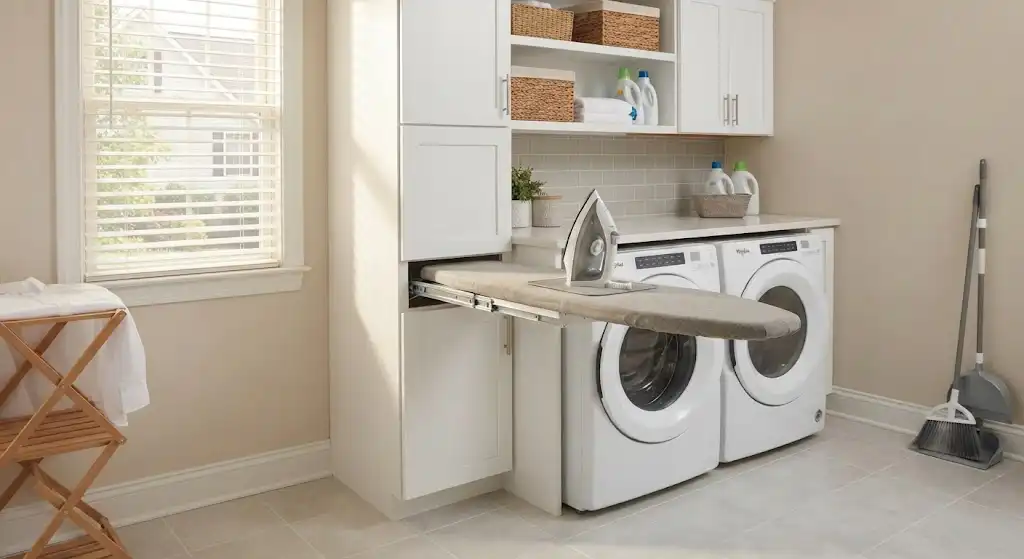
An ironing board can take up valuable floor space when stored traditionally, but a built-in pull-out version offers a much cleaner solution. The board can be installed inside a cabinet or drawer and pulled out only when needed. This keeps the ironing equipment hidden while preserving valuable room space. A built-in ironing station works especially well in larger laundry cabinets where there is unused vertical storage. Keep the ironing board close to the folding counter for an efficient workflow. A nearby shelf can hold an iron, spray bottle, and heat-safe accessories. Make sure the cabinet design allows the board to open fully without hitting another appliance or wall. This arrangement is particularly useful for people who regularly iron work shirts, uniforms, or formal clothing. When finished, simply fold the board back into its storage compartment. It is a practical feature that keeps the laundry room visually uncluttered.
9. Build a Laundry Room With a Mudroom Combination
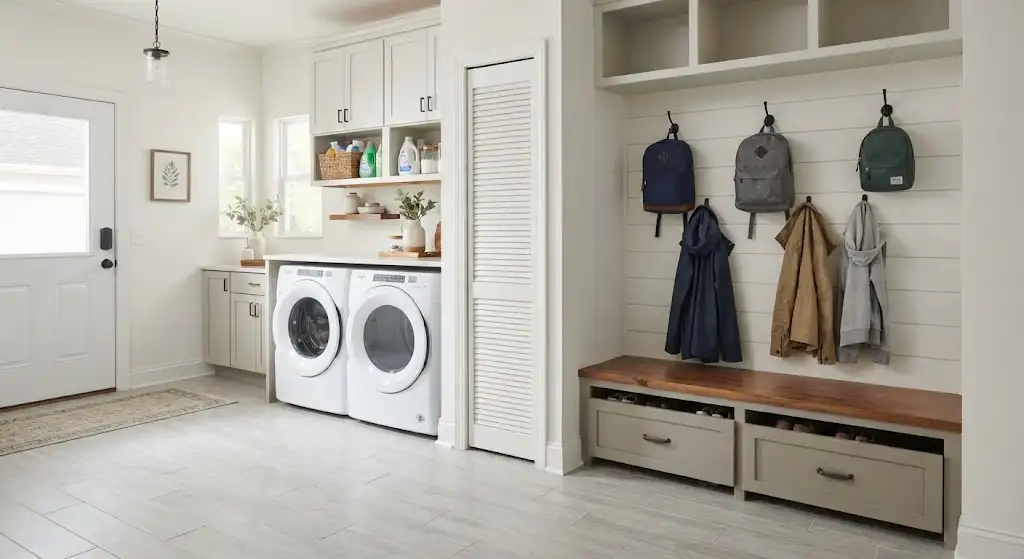
Combining a laundry room with a mudroom can be an excellent use of space in an American family home. This arrangement allows dirty clothes, shoes, coats, bags, and household laundry to be handled in one convenient location. Add hooks and cubbies along one wall for jackets and backpacks. Place the washer and dryer on the opposite side with cabinets or shelves above them. A bench can provide seating for removing shoes while also offering hidden storage underneath. Durable tile flooring is ideal because mudroom areas often experience more dirt and moisture. Keep laundry products safely stored away from everyday entryway items. Use a consistent color palette so the laundry and mudroom sections feel like one intentional space. This design works particularly well near a garage or side entrance. It can help prevent dirty shoes and outdoor clothing from spreading throughout the house.
10. Choose a Bright White Color Scheme
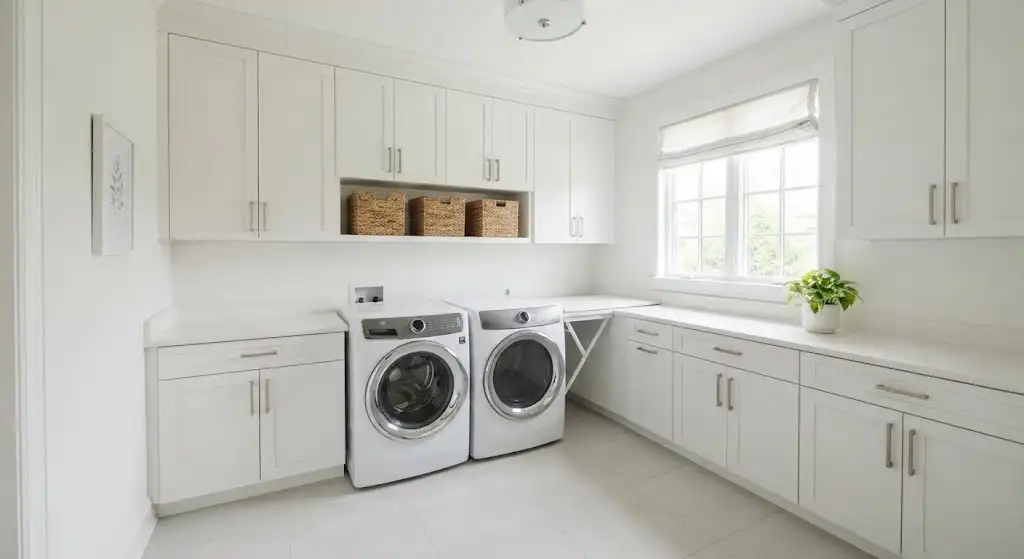
A white color scheme can make a laundry room look cleaner, brighter, and more spacious. White cabinets pair naturally with most washer and dryer finishes and can create a timeless backdrop for changing decor. To avoid a flat appearance, introduce different textures through wood shelves, woven baskets, patterned floor tiles, or brushed metal hardware. Soft gray accents can add depth without making the room feel dark. Natural daylight from a nearby window can make white surfaces appear especially fresh. For rooms without windows, use layered lighting rather than relying on one ceiling fixture. Keep the white surfaces clean because stains and spills can be more noticeable. Small decorative elements such as a plant, framed print, or simple rug can add warmth. A bright color scheme is especially effective in small laundry closets and basement laundry areas. The result is a calm and organized space that feels easy to maintain.
11. Add a Slim Rolling Storage Cart
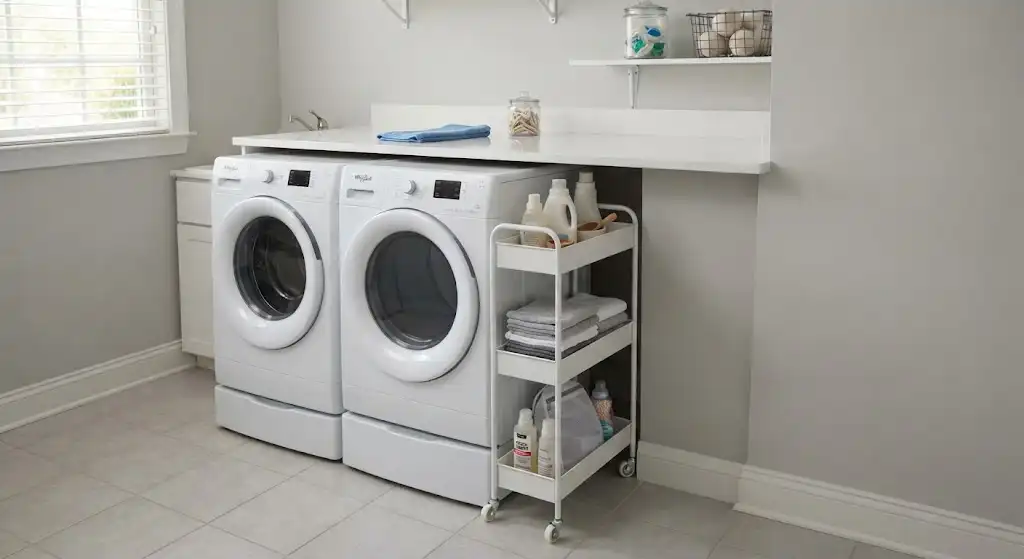
A slim rolling cart can turn an unused narrow gap into valuable laundry storage. These carts are particularly helpful in small laundry rooms where every inch matters. Place one between the washer and dryer if the appliance arrangement leaves a safe usable gap, or position it beside a cabinet. Use separate levels for detergent, stain-removal supplies, dryer accessories, and cleaning cloths. Choose a cart with sturdy wheels so it can be moved easily when cleaning the floor. A narrow metal or wood cart can complement the room without visually overwhelming it. Avoid overloading the cart because heavy containers can make it difficult to move. Keep frequently used products on the top shelf for easy access. The cart can also be rolled out when restocking or cleaning behind appliances. It is an affordable organizational feature that can add considerable convenience.
12. Use Built-In Hampers for Sorting
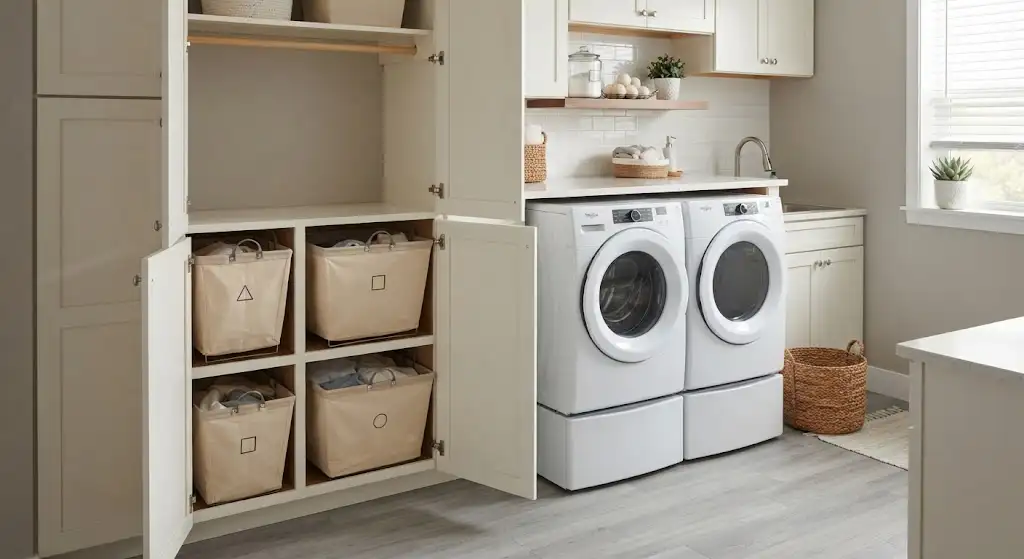
Built-in hampers can make sorting laundry much easier because dirty clothes have a designated location from the moment they enter the laundry room. Instead of placing multiple loose baskets on the floor, create separate pull-out hamper compartments inside a cabinet. Two or three compartments can be used for colors, whites, towels, or delicate garments. This system keeps dirty clothing hidden and helps the room maintain a tidy appearance. Choose cabinets with ventilation and durable interior surfaces that are easy to clean. Pull-out mechanisms should operate smoothly and be strong enough for regular household use. Position the hampers near the entrance so family members can place clothing inside as they enter. This can also reduce the number of sorting steps required before starting a washing cycle. Built-in hampers are especially useful for busy households and larger families. The result is a laundry room that looks cleaner while supporting a more efficient routine.
13. Add a Hanging Rod for Air-Drying Clothes
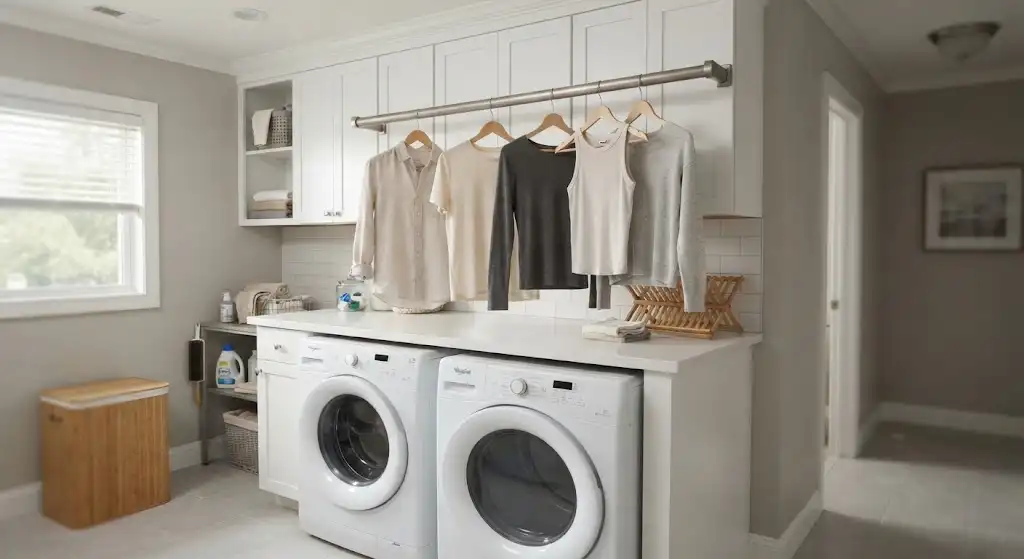
A hanging rod provides a convenient place to hang freshly washed shirts, dresses, jackets, and other garments before putting them away. It can be installed beneath an upper cabinet or between two storage units. This is especially helpful for clothing that wrinkles easily after drying. Choose a durable metal rod that can support several hangers without bending. Keep the rod high enough to allow clothing to hang freely without touching the countertop or floor. A wooden rod can provide a softer decorative appearance in farmhouse-style laundry rooms. A metal rod may work better for modern or industrial interiors. Position it near the dryer so clothes can move directly from the dryer to hangers. This can reduce wrinkles and eliminate some ironing. A simple hanging rod is an inexpensive feature that can significantly improve laundry workflow.
14. Create a Pet Laundry Station
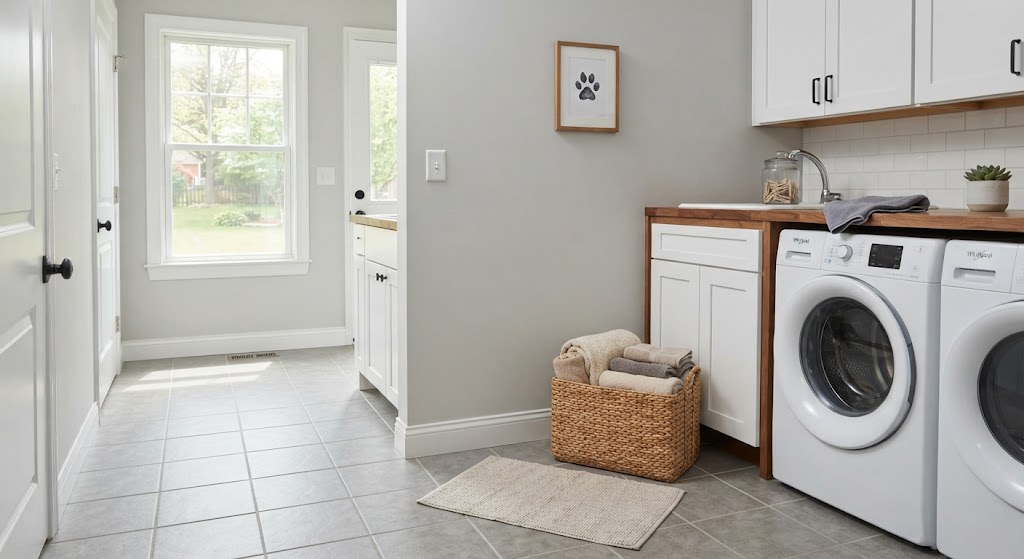
Households with pets can benefit from a laundry room area dedicated to washable pet bedding, towels, and accessories. A small lower cabinet or open shelf can store pet towels and cleaning supplies. A washable mat can protect the floor from wet paws and muddy items. If space allows, a deep sink can be used for rinsing washable pet items before placing them in the washing machine. Keep pet products physically separated from everyday clothing supplies. Closed storage is useful for keeping brushes, cleaning products, and other accessories organized. A labeled basket can hold pet blankets and towels waiting for their next wash. Durable flooring is especially important in this type of laundry space. This setup can make pet-related cleaning less disruptive to the rest of the household. It also gives frequently washed pet items a consistent place to stay.
15. Install Under-Cabinet Lighting
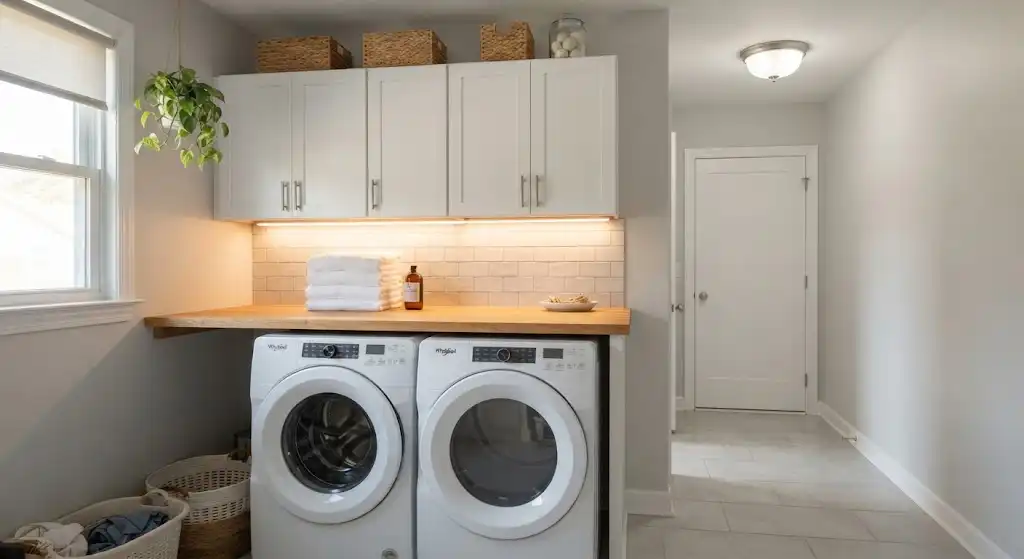
Good lighting can make a laundry room much easier to use, particularly when sorting stains, reading care labels, or folding clothes. Under-cabinet lighting provides focused illumination directly over the countertop. LED strip lighting is a popular option because it can provide bright, even light without taking up much space. Pair it with a central ceiling fixture for general room lighting. In darker laundry rooms, layered lighting can prevent shadows around appliances and countertops. Choose a neutral white light that makes clothing colors easy to see. Conceal wires and power connections for a clean appearance. Install lighting under cabinets above the folding area rather than placing it only above the appliances. This creates a practical workstation for sorting and folding. Better lighting is a small improvement that can make the laundry room feel more functional every day.
16. Use a Farmhouse-Inspired Laundry Room
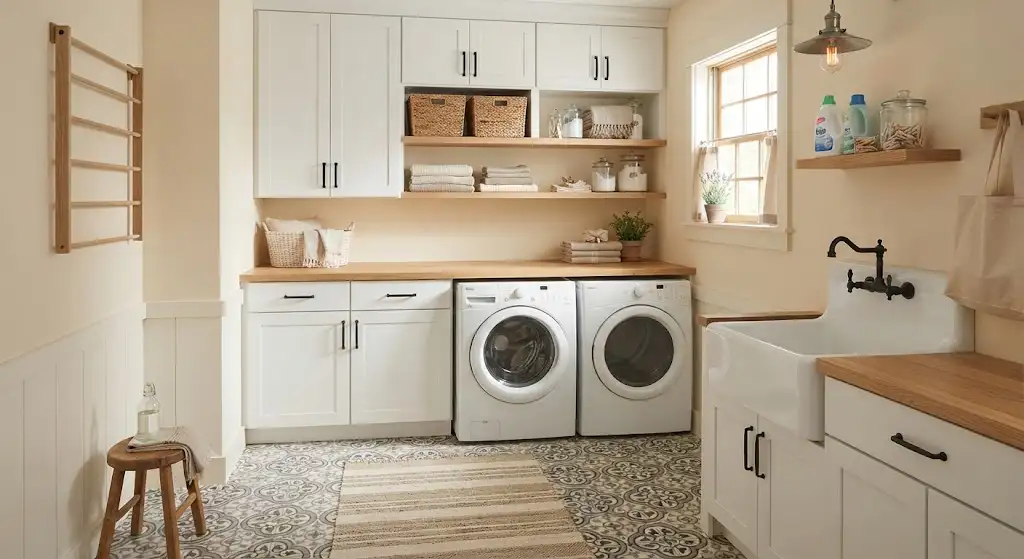
Farmhouse-inspired laundry rooms remain popular because they combine practical storage with a comfortable, welcoming appearance. White shaker cabinets, natural wood countertops, black hardware, and woven baskets can create a classic farmhouse atmosphere. A simple patterned tile floor can add character without overwhelming the room. Open shelving can display folded towels and attractive laundry containers. A farmhouse-style utility sink can become a useful centerpiece if the room has enough space. Keep decorative elements limited so the room remains practical rather than becoming crowded. Natural wood can soften an otherwise white room and create visual warmth. Neutral colors also make it easier to update accessories later. This style works well in suburban and rural American homes. The key is to balance decorative farmhouse details with functional laundry storage.
17. Add a Laundry Room Drying Cabinet
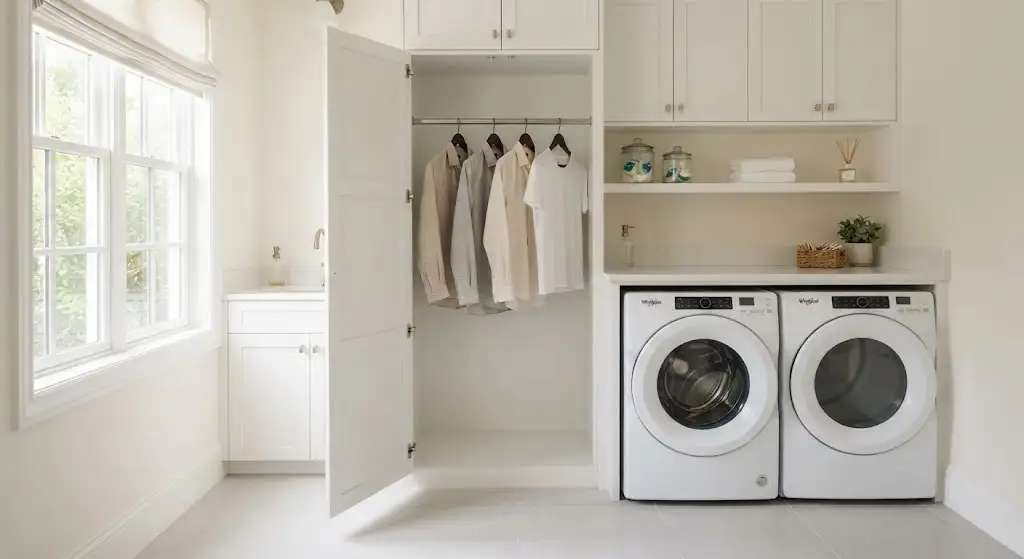
A dedicated drying cabinet can provide enclosed storage for garments that need special drying conditions. It can be particularly helpful when you want to keep delicate clothing separate from the regular dryer. The cabinet can also function as vertical storage when it is not being used for drying. A simple tall cabinet with a hanging rod can provide a practical alternative for air-drying clothes. Position it near the washer and dryer to create a smooth workflow. Add ventilation where appropriate and follow the manufacturer’s requirements if using an electrical drying cabinet. For a simpler design, use a tall cabinet as an enclosed hanging area without powered drying equipment. This keeps delicate garments visually organized while reducing clutter around the room. Neutral cabinetry can make the feature blend naturally into the rest of the laundry design.
18. Add a Comfortable Laundry Room Rug
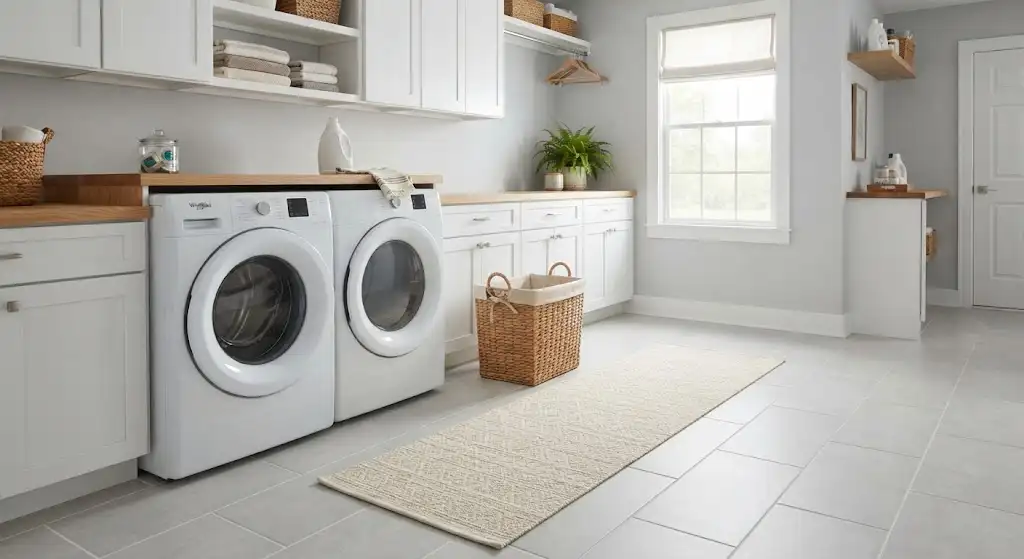
A washable rug can make a laundry room feel warmer and more comfortable, especially in rooms with hard tile flooring. Choose a low-pile, washable design that can handle occasional spills and moisture. Neutral patterns work well when you want the rug to blend with white cabinets and appliances. A runner can fit naturally in a long laundry room between the washer, dryer, sink, and cabinets. Avoid rugs that are too thick because they can interfere with doors or become difficult to clean. A non-slip backing can help keep the rug safely in place. Choose a size that leaves enough visible flooring around the edges. The rug can also introduce a subtle pattern without requiring a major renovation. This small decorating detail can make a functional utility room feel more like a finished part of the home.
19. Organize Detergent in Matching Containers
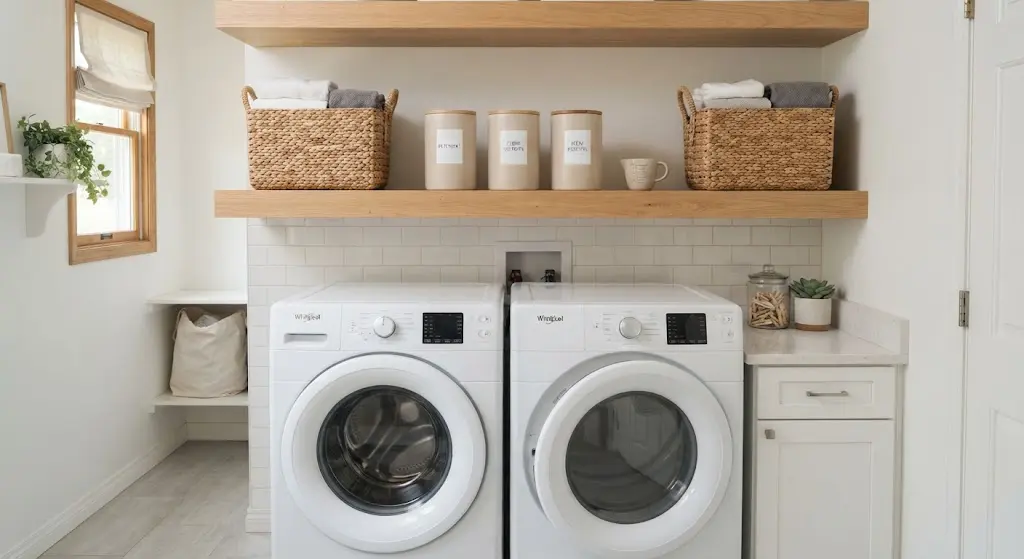
Matching detergent containers can make open shelves look considerably more organized. Instead of displaying a collection of mismatched bottles, transfer compatible laundry products into attractive containers designed for easy identification. Keep important product information and safety directions available according to the manufacturer’s requirements. Use practical pumps or measuring systems where appropriate to avoid spills. Place the most frequently used products within comfortable reach. Backup supplies can remain in a closed cabinet or lower storage area. Matching containers create a cleaner visual appearance, especially in small laundry rooms where everything is visible. Choose neutral containers that coordinate with the room’s color palette. Keep cleaning products stored securely and away from children and pets. This organization technique can make everyday laundry supplies easier to find while reducing countertop clutter.
20. Make Use of Vertical Storage
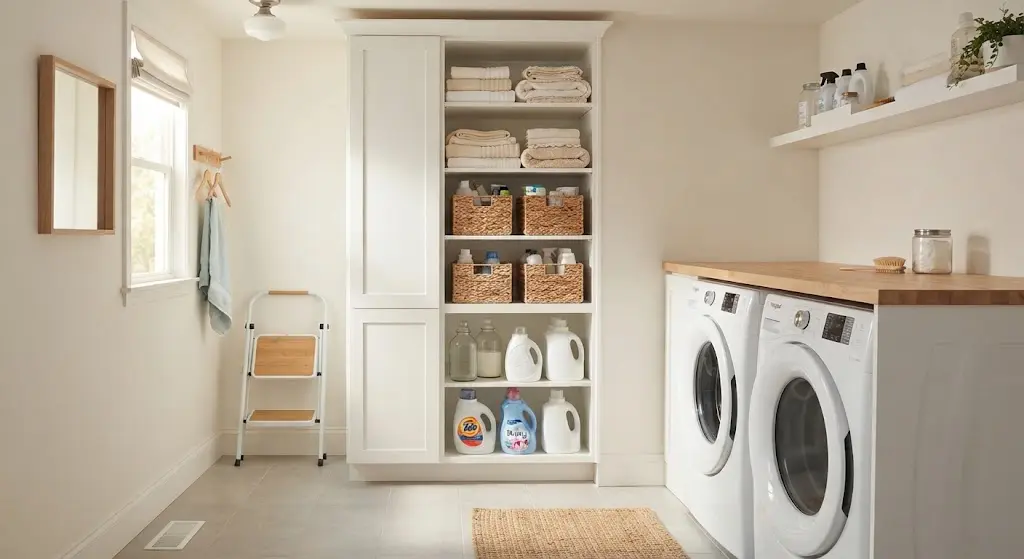
When floor space is limited, going upward is one of the smartest laundry room solutions. Tall cabinets and vertical shelves can provide substantial storage without making the room wider. Use the lower sections for heavy or frequently used items and higher shelves for backup supplies. A tall cabinet can store extra detergent, paper products, towels, cleaning tools, and seasonal items. Add baskets to smaller shelves to keep loose accessories contained. Make sure tall furniture is securely anchored to the wall for safety. Vertical storage works particularly well in narrow laundry closets and apartment laundry areas. Keep a small step stool nearby if higher shelves are difficult to reach. Avoid storing heavy containers at the very top. Thoughtful vertical organization allows a compact laundry room to provide much more storage than its footprint suggests.
21. Design a Complete Laundry Workflow
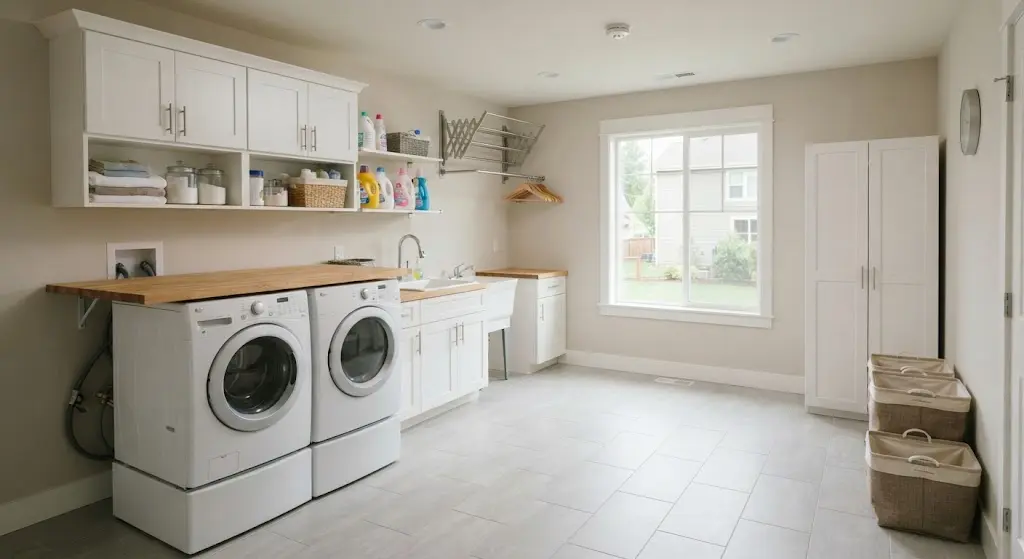
The best laundry room ideas are not only attractive; they make the entire process easier from start to finish. Design the room so dirty clothes enter near the sorting area, move naturally to the washer, then to the dryer or drying rack, and finally to a folding and hanging station. Storage should be positioned according to how frequently each item is used. Keep detergent near the washer, baskets near the sorting area, and hangers near the drying or folding zone. A countertop can serve as the final preparation area before clean clothes return to bedrooms and closets. If the room has enough space, include a utility sink for soaking and stain treatment. Good lighting should illuminate the work areas without creating harsh shadows. Keep walkways open so laundry baskets can move easily through the room. This workflow-based approach can make even a basic laundry room feel significantly more efficient. Instead of adding features randomly, every part of the room should support the way your household actually does laundry.
Final Thoughts
These 21 laundry room ideas show that a practical laundry space does not have to be boring or difficult to organize. Whether you have a spacious utility room or a narrow laundry closet, small improvements can make washing, drying, folding, and storing clothes much easier. Cabinets, countertops, baskets, drying racks, hanging rods, and vertical storage can help eliminate everyday clutter. A thoughtful layout is especially important because it allows clothes to move naturally from sorting to washing, drying, folding, and storage. For American homes, laundry rooms are increasingly being designed as functional spaces that also match the overall style of the house. Choose the ideas that fit your available space, budget, and household routine rather than trying to add every feature at once. Even one or two upgrades can make a noticeable difference. With the right organization, your laundry room can become one of the most efficient and enjoyable utility spaces in your home.