
Pantry moths can be frustrating because seeing one flying around your kitchen often means there may be eggs or larvae hiding somewhere nearby. These small pests commonly get into dry foods such as flour, cereal, rice, pasta, nuts, pet food, and baking ingredients. Simply killing the adult moths usually does not solve the problem because immature stages can remain hidden inside food packages. The most effective approach is to find the source, remove infested food, clean storage areas, and prevent another infestation. Pantry moths can also spread from one package to another when foods are stored close together. Fortunately, you do not necessarily need complicated methods to tackle them. A thorough cleanup combined with proper food storage can make a major difference. The following 19 methods focus on practical household steps that work well for kitchens in the United States.
1. Find the Source of the Infestation

The first step in getting rid of pantry moths is finding where they are coming from. Check your pantry, kitchen cabinets, shelves, drawers, and food-storage areas carefully. Look for webbing, clumped food, larvae, small holes, or unusual particles inside packages. Pay particular attention to flour, cereal, rice, pasta, baking mixes, nuts, dried fruit, spices, pet food, and birdseed. Pantry moth larvae can sometimes be found inside packages that appear completely normal from the outside. Remove suspicious products from the pantry and inspect them away from other food. Do not assume that the oldest package is necessarily the source because moths can enter newly purchased products. Finding the source is important because leaving even one contaminated package behind can allow the infestation to continue. Once you identify suspicious foods, seal them in a plastic bag before removing them from the kitchen. This prevents larvae or insects from spreading while you clean the area.
2. Throw Away Infested Food

Once you find contaminated food, dispose of it immediately. Pantry moth larvae can live inside dry-food packages, making it difficult to remove every insect manually. Place the suspected food into a tightly sealed garbage bag before taking it outside. Avoid leaving contaminated packages in an indoor trash can because larvae may continue developing and adults can emerge later. Check nearby packages as well, since pantry moths can spread to other dry goods. Even unopened cardboard boxes may contain an infestation if the product was contaminated before purchase. When in doubt, carefully inspect the food rather than relying only on the package being sealed. Do not taste or use food that shows webbing, larvae, unusual clumping, or other signs of contamination. After removing the food, clean the shelf where it was stored. Taking this step seriously helps break the pantry moth life cycle. Removing the food source is usually much more effective than simply killing the adult moths you see flying around.
3. Empty the Pantry Completely
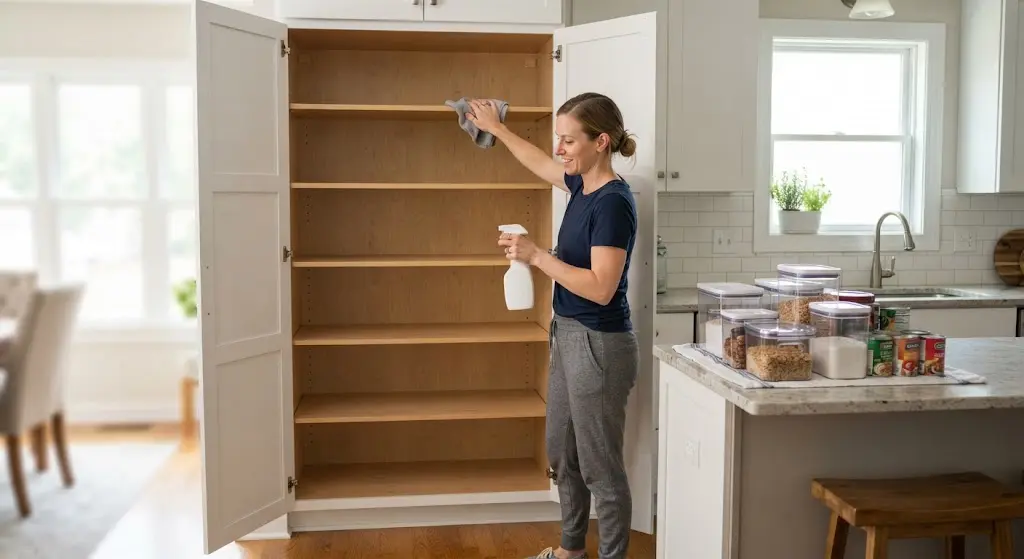
After removing suspicious food, take everything out of the affected pantry or cabinet. This gives you a clear view of corners, cracks, shelf edges, and hidden areas where eggs or larvae may be present. Do not clean around food containers while everything is still inside because small larvae can hide underneath packages. Place unaffected foods temporarily on a clean table or another isolated area. Inspect each package before returning it to the pantry. Pay attention to cardboard boxes, paper bags, plastic pouches, and other packaging that may have small openings. Emptying the entire area also makes it easier to vacuum crumbs and food particles that could attract pests. Work systematically from one shelf to another so nothing is overlooked. If the infestation is widespread, consider temporarily storing inspected food in sealed containers. A completely empty pantry is much easier to inspect and clean thoroughly. This simple step can help prevent overlooked larvae from starting the infestation again.
4. Vacuum Pantry Shelves and Cracks

Vacuuming is an important part of pantry moth control because larvae and eggs can hide in tiny spaces. Use a vacuum cleaner with a narrow attachment to reach shelf corners, cabinet joints, cracks, and edges. Vacuum around shelf supports and underneath removable shelves if possible. Pay special attention to areas where crumbs and food particles collect. Do not forget the floor immediately underneath the pantry. Move containers and appliances nearby so you can clean hidden areas as well. After vacuuming, empty the vacuum contents into a sealed bag and take it outside. This prevents anything collected from developing inside the vacuum cleaner. If your vacuum uses a removable container, clean it according to the manufacturer’s instructions. Vacuuming alone may not eliminate an infestation, but it is an important part of a thorough cleanup. Combining vacuuming with food disposal and proper storage gives you a much better chance of eliminating the problem.
5. Wipe Down Every Pantry Surface
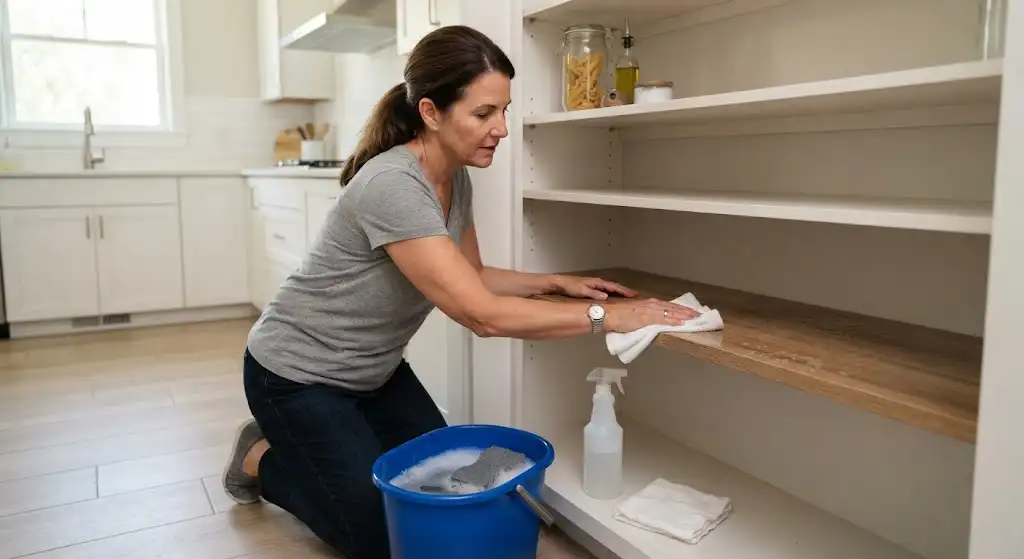
After vacuuming, wipe the pantry shelves and cabinet surfaces thoroughly. Use warm soapy water or an appropriate household cleaner suitable for the surface you are cleaning. Concentrate on shelf corners, edges, cracks, and areas where food particles may have accumulated. Cleaning removes crumbs and residue that can remain after vacuuming. Use a clean cloth or disposable paper towel for each particularly dirty section. Avoid mixing household cleaning chemicals because some combinations can create dangerous fumes. Allow shelves and surfaces to dry completely before putting food back. This is also a good opportunity to clean containers and jars before returning them to storage. Pantry moths do not necessarily disappear because a surface looks clean, so combine surface cleaning with inspection and food disposal. A thorough cleaning routine can also help you notice hidden signs of an infestation. Keeping pantry surfaces clean makes your storage area less attractive to pests and easier to inspect in the future.
6. Inspect Flour and Baking Ingredients

Flour and baking ingredients deserve special attention during a pantry moth inspection. Products such as flour, cake mix, pancake mix, breadcrumbs, and baking ingredients can provide suitable food for pantry moth larvae. Carefully examine packages for webbing, clumping, larvae, or small holes. Check both opened and unopened products because contamination can sometimes occur before a product reaches your home. If a package looks suspicious, isolate it from other foods until you decide whether to discard it. Avoid keeping questionable products simply because they are expensive or nearly full. One contaminated ingredient can allow moths to reproduce and spread throughout your pantry. Consider transferring frequently used dry ingredients into airtight containers after inspection. Label containers with the product name and purchase date if helpful. Regular inspection is particularly useful if you bake frequently or keep many dry ingredients at home. A few minutes of checking can prevent a small problem from becoming a larger pantry infestation.
7. Check Cereal, Pasta, Rice, and Grains

Pantry moths can also infest common dry staples such as cereal, pasta, rice, oats, and other grains. Inspect boxes and bags carefully, especially around seams, folds, and openings. Look for webbing, larvae, clumped grains, or small signs of contamination. Do not overlook products that appear unopened because insects can sometimes enter through tiny gaps or arrive in contaminated packaging. Keep questionable products away from other food while you inspect them. If you find clear evidence of infestation, dispose of the product in a sealed bag. Clean the shelf where the product was stored before returning other foods. Once your pantry is clear, consider using airtight containers for grains and cereals. Clear containers also make future inspections easier because you can see the contents. Store dry foods away from moisture and excessive heat whenever possible. Regularly rotating older food products can also help you notice problems before they become widespread.
8. Inspect Pet Food and Birdseed

Pet food and birdseed are often overlooked when people search for the source of pantry moths. Dry dog food, cat food, treats, and birdseed can sometimes become infested with stored-product pests. If these products are kept inside your kitchen, pantry, garage, or utility room, inspect them carefully. Look inside bags for webbing, larvae, unusual clumping, or insects. Large bags should receive particular attention because they can provide a substantial food source. Keep pet food in a sealed container after opening it. Do not transfer contaminated food into a clean container because the container could then become part of the infestation. If you find evidence of pests, dispose of the affected food safely. Clean the storage area before bringing in a new bag. Buying smaller quantities may also help reduce the amount of food stored for long periods. Regular inspection of pet food can prevent an overlooked infestation from continuing after the kitchen pantry has been cleaned.
9. Use Airtight Food Containers

Airtight containers are one of the best ways to protect dry foods after you have cleaned your pantry. Choose containers with secure lids that create a reliable seal. Glass jars, heavy-duty plastic containers, and other food-safe storage containers can work well. Transfer inspected flour, cereal, rice, pasta, nuts, and other dry goods into clean containers. Do not place food into a container if you suspect the food is already contaminated. Wash and completely dry containers before filling them. Transparent containers are particularly useful because they allow you to see the food without opening the package. Proper storage also makes your pantry look more organized and makes future inspections easier. Keep containers closed whenever food is not being used. Replace damaged or poorly sealing containers when necessary. Airtight storage does not replace cleaning, but it can make it much harder for pantry moths to spread from one product to another.
10. Use Pantry Moth Pheromone Traps
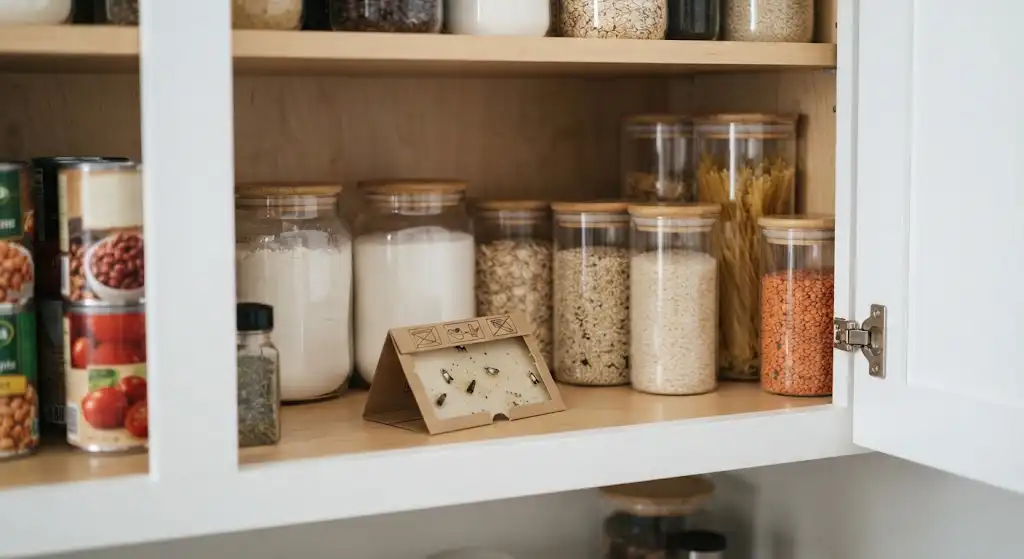
Pantry moth pheromone traps can help monitor and reduce adult male moth activity. These traps use a scent designed to attract specific pantry moth species. Place traps according to the manufacturer’s instructions rather than putting them randomly throughout the kitchen. They are especially useful for determining whether adult moths are still active after you have cleaned the pantry. Remember that traps do not solve the entire infestation because they primarily target adult males rather than eggs and larvae hidden in food. Continue inspecting and cleaning your pantry even if the trap catches moths. Avoid assuming that a trap catching several moths means every stage of the infestation has been eliminated. Replace traps according to their labeled instructions. Keep them away from children and pets as directed on the product label. Used correctly, pheromone traps can be a helpful monitoring tool. They work best as part of a broader pantry moth control strategy rather than as the only treatment.
11. Freeze Suspect Dry Foods When Appropriate
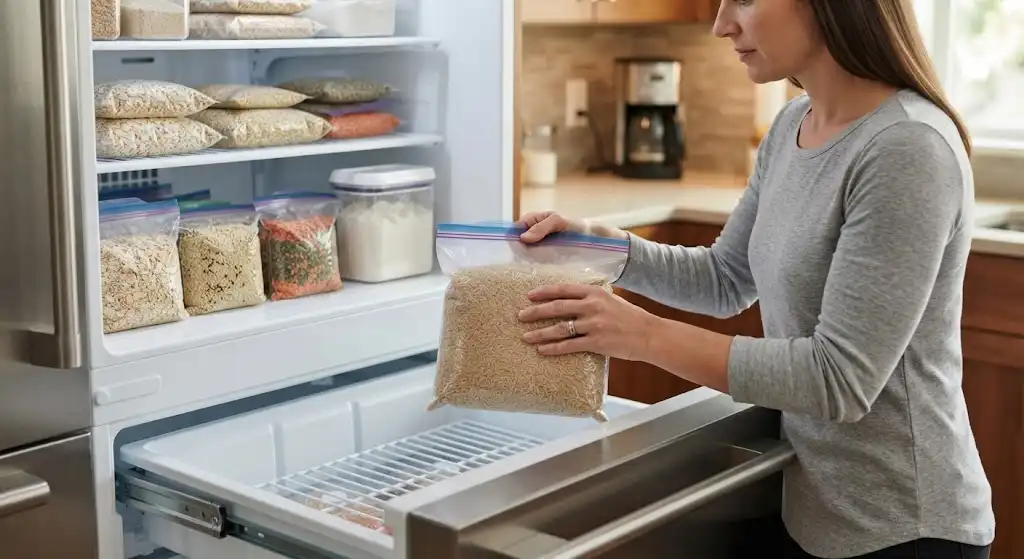
Freezing can be useful for certain dry foods when you want to kill pantry pests at different life stages. If a product is suitable for freezing, place it in a properly sealed freezer-safe bag or container. Keep the food frozen according to a reliable food-storage or pest-control recommendation rather than relying on a very short freezing period. After treatment, keep the food sealed while it returns to room temperature to reduce condensation problems. Freezing is more useful as a preventive or salvage technique for appropriate dry goods than as a replacement for disposing of clearly contaminated food. Do not freeze products in packaging that could leak or become damaged. When dealing with questionable food, disposal is often the simplest option. If you are unsure whether a specific product can safely be frozen, check its packaging or manufacturer’s guidance. Always maintain normal food-safety practices during storage. Used carefully, freezing can be an additional tool for protecting suitable dry foods from stored-product pests.
12. Clean Around Pantry Appliances and Hidden Areas
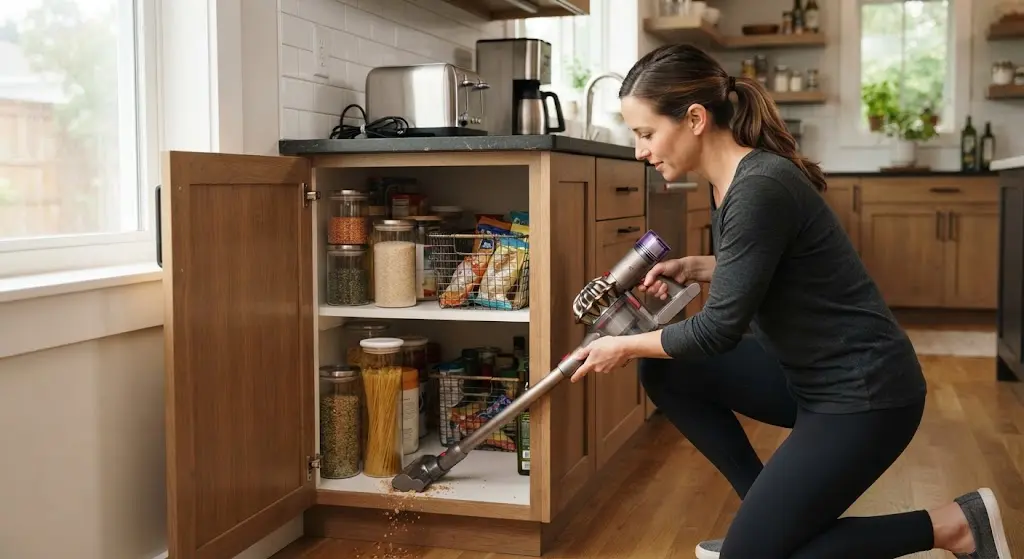
Pantry moths and food crumbs are not always limited to the main shelves. Check around countertop appliances, storage baskets, drawer tracks, and gaps beside cabinets. Crumbs from cereal, flour, crackers, or other dry foods can accumulate in places that are easy to overlook. Move portable appliances when it is safe to do so and clean underneath them. Check the space beneath shelves and behind storage bins as well. Do not disassemble electrical appliances unless the manufacturer specifically provides safe cleaning instructions. Focus on accessible areas where food particles can collect. Vacuuming and wiping these spaces can remove hidden debris that supports pests. If your pantry connects to a laundry room, garage, or utility area, inspect nearby dry-food storage too. A thorough inspection is especially important when moths continue appearing after the pantry has been cleaned. Eliminating hidden food sources can help prevent the problem from returning. Think of the entire food-storage area rather than just the cabinet where you first noticed a moth.
13. Seal Pantry Cracks and Gaps
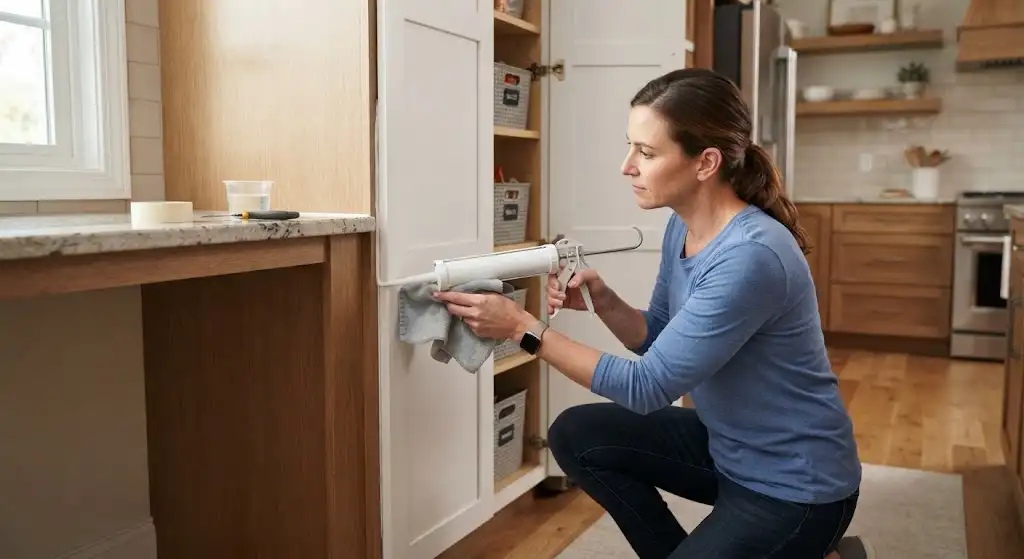
Small cracks and gaps around cabinets can make cleaning and pest control more difficult. Inspect the pantry for openings around shelves, cabinet joints, trim, and other accessible areas. Seal suitable gaps using an appropriate household sealant or caulk when necessary. Make sure the surface is clean and dry before applying any product. Follow the product’s directions and allow it to cure properly before placing food nearby. Sealing gaps will not eliminate pantry moths already living inside contaminated food. Instead, it can make the storage area easier to maintain and reduce hidden spaces where pests may remain. Focus on practical household maintenance rather than attempting to seal every tiny opening in your entire home. If you discover a significant structural gap or damage, consider asking a qualified professional to inspect it. Keep all repair products away from food and food-contact surfaces. A well-maintained pantry is easier to clean and monitor over time.
14. Keep Your Pantry Dry and Clean

A clean, dry pantry is easier to manage and inspect for stored-food pests. Wipe up spills as soon as they happen and avoid allowing food crumbs to accumulate on shelves. Store dry foods properly and keep containers closed when they are not being used. Check shelves periodically for forgotten packages or expired ingredients. Do not overcrowd cabinets because tightly packed shelves make it harder to notice contamination. Keep foods organized so older products can be used before newer ones. If you notice moisture, leaks, or damaged shelving, address those household issues promptly. Good pantry organization does not guarantee that pantry moths will never appear, since infestations can arrive inside purchased food. However, it makes early detection much easier. A tidy pantry also allows you to clean shelves quickly when needed. Make routine pantry inspection part of your normal kitchen-cleaning schedule.
15. Rotate Older Dry Foods First

Food rotation can help you identify stored-food problems before they become widespread. Place newer products behind older ones so older items are used first. This approach is especially helpful for foods that may remain in your pantry for several months. Regularly check dates, packaging condition, and the appearance of dry foods. Do not keep packages simply because they are unopened if you notice damage or contamination. Organizing food by purchase date can also make pantry cleaning easier. Transparent containers make it simpler to see how much food remains. If you find an old product that you forgot about, inspect it before using it. Keeping fewer forgotten packages in the pantry reduces the number of places where pests can remain unnoticed. Food rotation is a simple habit that can support long-term pantry management. Combine it with airtight storage and regular cleaning for a more effective prevention routine.
16. Inspect New Grocery Purchases

Pantry moth control should also include the food you bring home from the grocery store. Before putting dry goods into your pantry, quickly inspect packages for damage, webbing, or unusual signs. Pay particular attention to products stored for long periods, such as flour, cereal, rice, pasta, nuts, and baking ingredients. If a package looks damaged or suspicious, keep it away from your existing pantry food. Consider storing frequently affected dry goods in airtight containers after purchase. Do not immediately mix a new product with an existing supply in the same container unless the new product has been inspected. Keeping newly purchased products organized also makes it easier to track what you bought and when. If you repeatedly find insects in unopened products, keep the packaging and purchase information and contact the retailer or manufacturer. This can help identify a product-related issue. Grocery inspection takes only a few seconds but can prevent a contaminated package from introducing pests into a clean pantry.
17. Clean Reusable Storage Containers
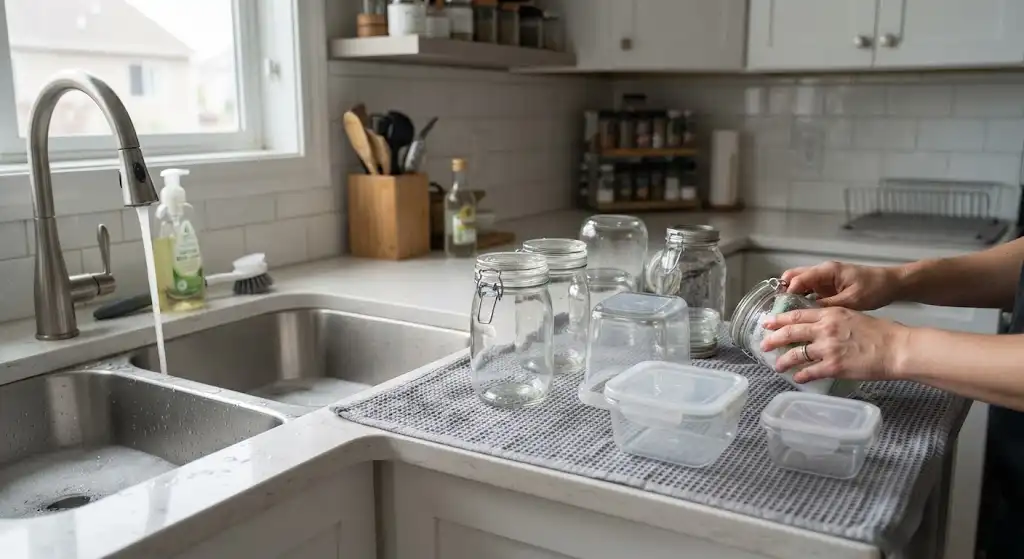
Reusable food containers can become a problem if contaminated food is transferred into them. Before reusing containers that held suspicious dry foods, wash them thoroughly according to their material and manufacturer’s instructions. Pay attention to lids, threads, grooves, and corners where food particles can remain. Allow containers to dry completely before adding new food. If a container has cracks or damaged seals, replace it rather than relying on an imperfect closure. Clean containers also make it easier to spot new signs of contamination. Do not refill a container immediately if you have not confirmed that it is clean and dry. Keeping storage containers in good condition is an important part of long-term pantry organization. Glass containers are often convenient because their contents are easy to inspect. Whatever material you choose, the most important feature is that the container is clean, food-safe, and securely closed.
18. Monitor the Pantry After Cleaning

Do not assume the infestation is gone immediately after your first cleanup. Continue checking the pantry regularly for adult moths, larvae, webbing, or damaged food packages. Monitoring is especially important during the weeks following a major infestation because hidden pupae may still develop. Keep suspicious foods out of the pantry while you are monitoring the situation. If you use a pheromone trap, check it according to the product instructions. Keep the pantry organized so you can quickly identify any new signs. If you continue finding moths, repeat the inspection and look for a missed food source. Check nearby storage areas such as pet-food storage and utility cabinets if the problem persists. Avoid relying on a single method because pantry moth control usually requires several steps. Persistent or unusually extensive infestations may require advice from a licensed pest-control professional. Consistent monitoring is what helps determine whether your cleanup actually worked.
19. Repeat the Inspection if Moths Return

Seeing pantry moths again does not always mean your first cleanup failed completely. Some life stages may have been hidden in an overlooked package or storage area. If adult moths return, repeat the inspection from the beginning rather than simply killing the visible moths. Check dry foods again, including products that appeared unaffected during the first inspection. Look through pantry corners, storage bins, pet food, birdseed, and other dry-food areas. Dispose of newly discovered contaminated products in sealed bags. Vacuum and wipe the affected shelves again. Continue using appropriate monitoring traps if desired and follow their product instructions. If moth activity continues despite repeated cleaning and food inspection, consider contacting a qualified pest-control professional for further evaluation. Avoid using pesticides directly on food, food-contact surfaces, or inside food containers unless the product label specifically allows that use. A systematic approach is more effective than repeatedly treating only the adult moths you can see. Persistence and careful food inspection are the keys to breaking the pantry moth cycle.
Final Thoughts
Getting rid of pantry moths for good usually requires more than killing the adult moths you notice flying around the kitchen. The most important steps are finding and removing contaminated food, thoroughly cleaning the pantry, vacuuming hidden areas, inspecting nearby dry goods, and storing food in airtight containers. Pheromone traps can help monitor adult moth activity, but they should be treated as one part of a broader cleanup strategy. If moths continue appearing after repeated inspections, check overlooked foods such as pet food, birdseed, baking ingredients, grains, and older pantry items. For a persistent or extensive infestation, professional pest-control advice may be appropriate. With careful inspection and better food-storage habits, you can make your pantry much less likely to become a long-term home for pantry moths.